
Structural Watertight Concrete (SWC)
Stop waterproofing concrete after it leaks — design it not to leak in the first place. SWC combines SteelX twisted steel reinforcement to control crack widths below 0.10 mm with E5 Waterproofing to reduce matrix permeability by up to 80%, delivering concrete that is watertight by design — no membranes, no coatings, no additional trades.
The Challenge
Concrete is cracking under service loads, and crack widths are too large to resist water ingress. Standard basement designs produce service crack widths of 0.37–0.46 mm — water flows freely through cracks this wide. The industry response is to add waterproofing after the concrete fails: membranes, crystalline treatments, coatings, and drainage systems costing $200–250/m² in materials, labour, time, and risk. These systems have short lifespans, require maintenance, and builders and owners bear the long-term liability. But if we can design tanks to hold water in (AS 3735), why can't we design slabs to keep water out?
Our Approach
SWC addresses both root causes of concrete leakage. First, SteelX twisted steel reinforcement is added to the concrete mix (15–40 kg/m³) alongside conventional reinforcement — SteelX reduces mean crack widths by 75–90% to below 0.10 mm, the threshold defined by AS 3735 (Concrete Liquid Retaining Structures) where concrete becomes watertight even under hydrostatic pressure. Second, E5 Internal Cure and E5 Liquid Fly Ash reduce the permeability of the concrete matrix by up to 80% (DIN 1048-5 tested) and enable self-healing of cracks up to 32µm. Because SteelX holds cracks tight, E5 self-healing is even more effective. The result: concrete that is watertight by design, not by coating.
Key Benefits
How It Works
Design the concrete mix for low shrinkage and high strength per AS 3600 / AS 3735 crack control provisions
Add SteelX twisted steel reinforcement at the batching plant (15–40 kg/m³) — conventional steel reinforcement remains unchanged
Add E5 Internal Cure and E5 Liquid Fly Ash at the plant or on site — nano-silica particles densify the concrete matrix and reduce permeability
SteelX limits mean crack width to below 0.10 mm under service loads — at this width, concrete resists hydrostatic pressure
E5 reduces water penetration depth by approximately 80% and enables self-healing of hairline cracks up to 32µm
Use hydrophilic or PVC waterstops at all construction joints for complete joint protection
No new trades, no membranes, no extended timelines — the concrete itself is the waterproofing system
The Current Approach — Why Concrete Leaks
Designed for Strength
Concrete is designed to carry loads, but crack width analysis is generally ignored.
Cracks Ignored
Crack width analysis under service conditions is not performed during design.
Water Ingress
Service crack width ≈ 0.40 mm — water flows freely through cracks this wide.
Add Membranes
Solution: membranes, coatings, crystalline treatments — $200–250/m² in materials, labour, and risk.
The problem: Extra trades, membranes, crystalline treatments, drains. Short lifespans and maintenance headaches. Builders and owners bear the long-term liability.
Standard vs Watertight Concrete Slab
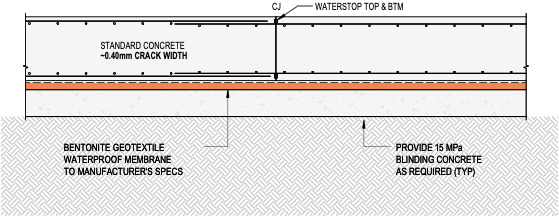
Requires bentonite/geotextile waterproof membrane and blinding concrete — extra trades, cost, and maintenance liability.
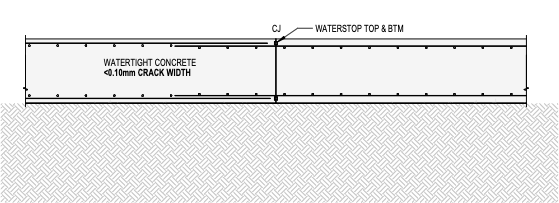
No membrane, no blinding concrete — watertight by design. Fewer trades, faster programme, lower long-term risk.
The SWC Approach — Two Systems, One Solution
Control Crack Width
SteelX Rebar
Twisted steel reinforcement reduces mean crack width to below 0.10 mm — the watertightness threshold per AS 3735.
Reduce Permeability
E5 Waterproofing
E5 Internal Cure + Liquid Fly Ash reduces water penetration by 80% and enables self-healing of cracks up to 32µm.
Watertight by Design
No Membranes
Concrete becomes watertight by design, not by coating. No new trades, no extended timelines.
Crack Width Design Comparisons
Standard basement design vs SWC — same service moment, dramatically different crack performance
Example 1 — 600 mm Basement Slab
Standard Design
Not watertight — membrane required
SWC Design
Watertight by Design — no membrane
Example 2 — 800 mm Basement Slab
Standard Design
Not watertight — membrane required
SWC Design
Watertight by Design — no membrane · Save over $100/m²
Example 3 — 450 mm Basement Slab
Standard Design
Not watertight — membrane required
SWC Design
Watertight by Design — no membrane · Save over $150/m²
SWC Implementation
Concrete Mix
Low shrinkage, high strength mix design
Add SteelX
SteelX added at batching plant (15–40 kg/m³)
Add E5 Waterproofing
E5 Internal Cure + E5 Liquid Fly Ash added at plant or on site
No New Trades
No membranes, no coatings, no extended timelines
Joints — Water Stop
Use hydrophilic or PVC waterstops at all construction joints for complete joint protection.
Quality Design & Concrete Assurance
"How do we know it's watertight?"
Crack-Width Design
Verified via structural analysis per AS 3600 / AS 3735
Permeability Verified
Tested via DIN 1048-5 / BS EN 12390-8
QA Checks
Mix control, compaction, curing, joint detailing
Concrete QA
Slump test every truck, water stamp batch tickets, validate shrinkage
McClay Support
McClay Industries provides QA, verification, and on-site control
Self-Healing Synergy — Why SWC Works
E5 promotes C-S-H (binder) growth, not just filling cracks with crystals — it restores strength to cracks. Because SteelX holds cracks tight (below 0.10 mm), self-healing is highly effective.
Conventional Concrete
SWC with SteelX + E5
< 0.10 mm crack — held tight by SteelX, self-healed by E5
SteelX reduces crack widths by 75–90% — holding cracks tight enough for E5 self-healing to work
E5 nano-silica promotes C-S-H growth across cracks — restoring structural strength, not just filling voids
Research proves cracks up to 32µm fully seal within 2 wet-dry cycles (Purdue University)
Combined system is watertight for the life of the structure — not just at day one
Case Studies

Mooloolaba Basement Slab
Mooloolaba, QLD
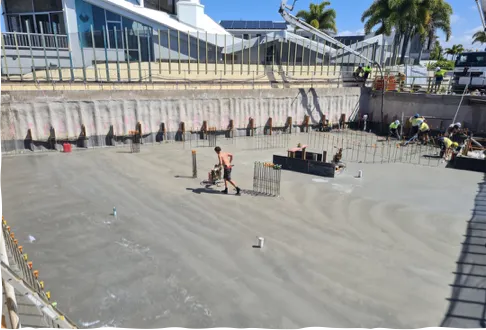
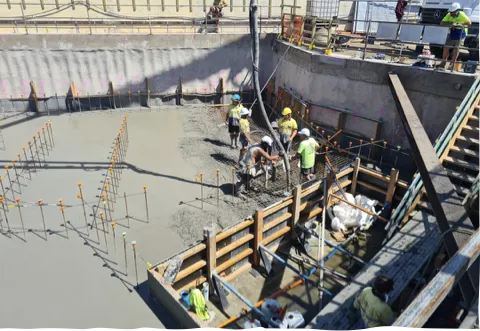
- 450 mm thick basement slab
- N16-200 EW T&B reduced to SL81 T&B + SteelX
Sunshine Coast Recreation Centre
Sunshine Coast, QLD
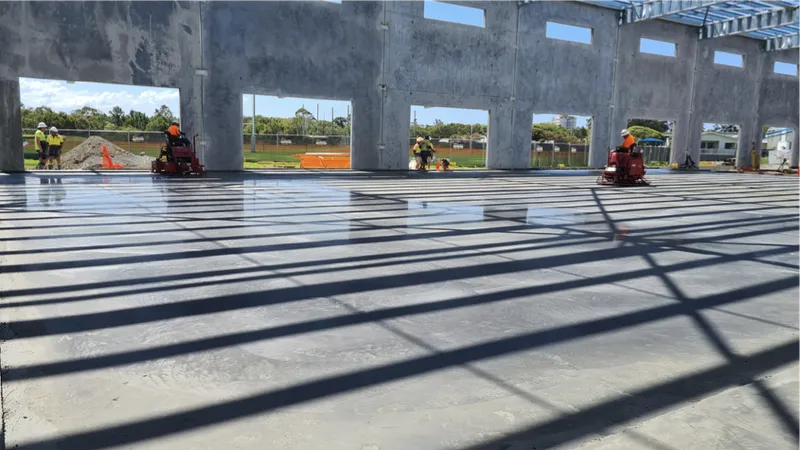
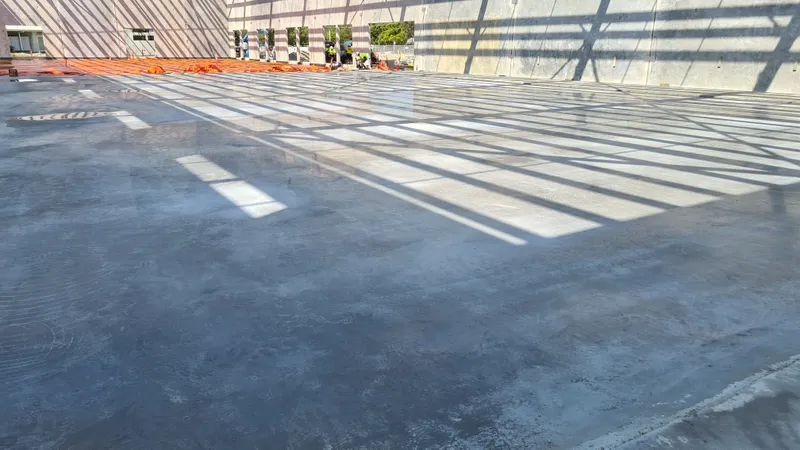
- Liberty Slab — 150 mm thick
- SL92 mesh + 18 kg/m³ SteelX 5:25
- Originally specified as post-tension slab — changed to SteelX Liberty Slab

Toowoomba North State School
Toowoomba, QLD
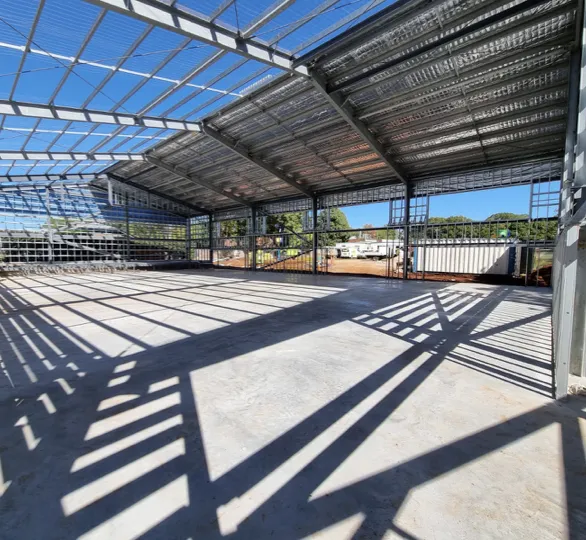
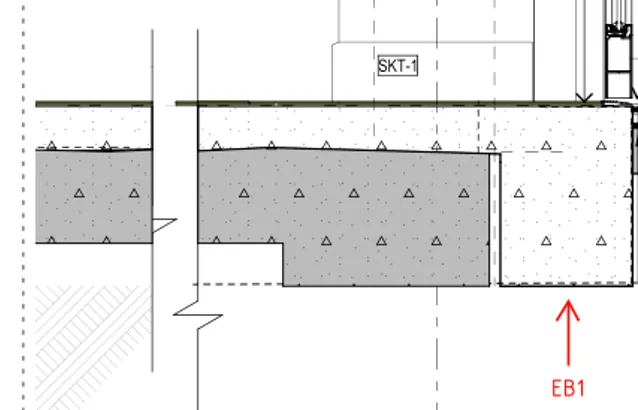
- Jointless topping slab — 29 m × 21 m
- 70–120 mm thick, SL72 mesh
- 18 kg/m³ SteelX 5:25 + E5 Internal Cure
- Fully restrained by edge beam
- Not a single visible crack — reported by engineer
Jointless Freezer Slab
Narangba, QLD
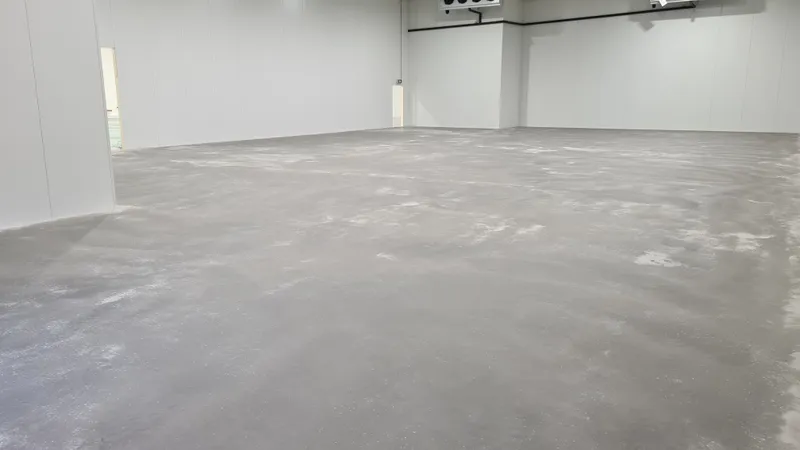
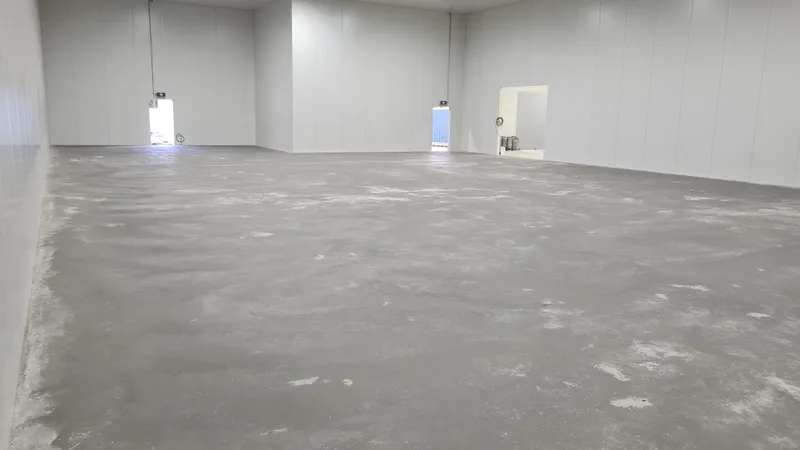
- 31 m × 17 m, unrestrained
- SL82 Mesh + 18 kg/m³ SteelX 5:25
Podium Slab — Industrial
Forest Glen, QLD
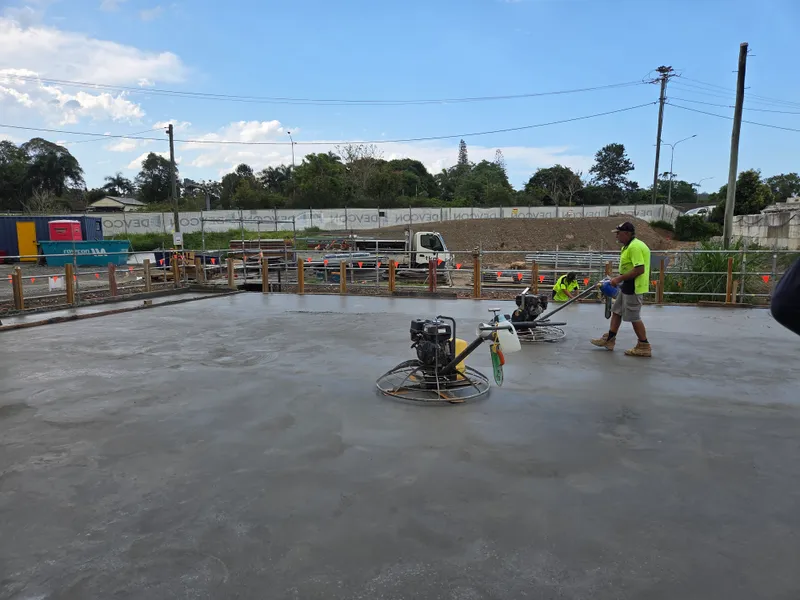
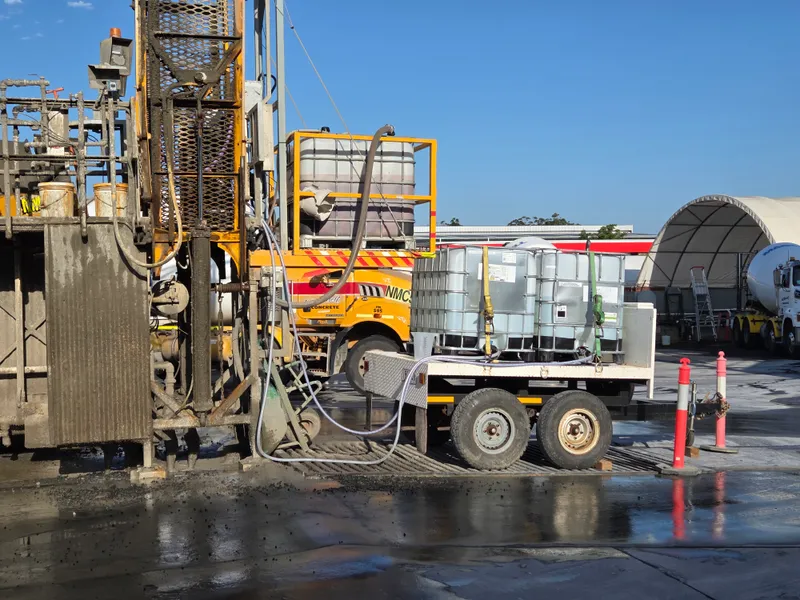
- Removed trafficable membrane
- 30 kg/m³ SteelX 5:25 added to control crack widths <0.10 mm
- E5 Waterproofing
- E5 Internal Cure + E5 Liquid Fly Ash
- Dosed at Mansell Premix
Ideal For
- Basement walls, podium slabs, and below-ground car parks
- Water storage tanks, reservoirs, and aquatic centres
- Spillways, dams, and hydraulic structures
- Retaining walls and earth-retaining structures
- Lift pits, service trenches, and buried infrastructure
- Any structure where membrane failure risk is unacceptable
Services We Provide
- SWC specification and crack-width design verification
- Structural analysis — service moment and crack width calculations
- Permeability testing and compliance verification (DIN 1048-5)
- Mix design for low shrinkage and high strength
- Quality assurance — mix control, compaction, curing, joint detailing
- On-site control and verification support
Products for This Solution
SteelX 5:25
Twisted steel reinforcement (0.5 mm dia, 25 mm length, 1900 MPa) for pre-crack control — reduces crack spacing and width by 75–90%
View ProductSteelX 8:45
Twisted steel reinforcement (0.8 mm dia, 45 mm length, 1900 MPa) for post-crack performance and larger structural elements
View ProductE5 Internal Cure
Proprietary nano-silica admixture (AS 1478.1 Type SN) — self-curing, densified matrix, increased hydration
View ProductE5 Liquid Fly Ash
Liquid SCM for molecular particle packing — consumes calcium hydroxide, reduces permeability, replaces up to 10% cement
View Product