
Waterproofing Under Hydrostatic Conditions
E5 Nano-silica admixtures create waterproof concrete by reacting with calcium hydroxide to form more C-S-H gel, compacting the pore structure, reducing permeability by up to 80%, and enabling self-healing of cracks up to 32µm — delivering integral waterproofing that performs under hydrostatic pressure without external membranes.
The Challenge
Waterproofing under hydrostatic conditions demands concrete that can perform two critical functions: reduce permeability by 50–90% to resist water pressure, and self-seal cracks over the life of the structure (ACI 212.3R-10, Chapter 15). Traditional external membranes, coatings, and tanking systems are vulnerable to damage during backfilling, fail at joints and penetrations, and deteriorate with age. Repairs require costly excavation and are disruptive to building operations.
Our Approach
Combining E5 Internal Cure and E5 Liquid Fly Ash delivers integral waterproofing at the nano level. E5 Internal Cure — a proprietary nano-silica in suspension and AS 1478.1 Type SN admixture — ensures complete hydration with precisely sized nanoparticles for optimal water control, creating a harder, denser concrete matrix. E5 Liquid Fly Ash — the most efficient supplementary cementitious material for consuming calcium hydroxide — provides molecular particle packing for dense concrete while replacing up to 10% of cement for carbon reduction. Together, they reduce water penetration depth by approximately 80% (DIN 1048-5 / BS EN 12390-8 testing) and achieve a permeability coefficient of 6.13 × 10⁻¹³ cm/sec under 1.38 MPa pressure (USACE CRD-C48 testing). Peer-reviewed research from Purdue University confirms E5 nano-silica enables self-healing of cracks up to 32µm.
Key Benefits
How It Works
E5 Internal Cure is added to the concrete mix — nano-silica particles control hydration and create a densified concrete matrix
E5 Liquid Fly Ash reacts with calcium hydroxide to form additional C-S-H gel, compacting the pore structure at the molecular level
The combined system reduces water penetration depth by approximately 80% compared to reference concrete (DIN 1048 tested)
Under hydrostatic pressure (1.38 MPa for 14 days), virtually zero water passes through the concrete (USACE CRD-C48 tested)
Over the life of the structure, nano-silica continues to react, self-sealing hairline cracks up to 32µm (Purdue University peer-reviewed research)
Permeability Test Results
DIN 1048-5 / BS EN 12390-8 — Constant water pressure 0.5 MPa for 3 days
| Mix ID | Sample | Max Depth (mm) | Avg Depth (mm) | Reduction |
|---|---|---|---|---|
| Reference | Depth 1 | 20.3 | 22.6 | — |
| Depth 2 | 25.1 | |||
| Depth 3 | 22.1 | |||
| E5 IC + LFA | Depth 1 | 6.1 | 4.8 | 79.6% |
| Depth 2 | 2.8 | |||
| Depth 3 | 5.6 |
Reference Concrete
E5 Internal Cure + Liquid Fly Ash
Average depth of water penetration over 3 days — 79.6% reduction
USACE CRD-C48 Permeability Test
U.S. Army Corps of Engineers standard — Constant water pressure 1.38 MPa for 14 days
| Parameter | E5 Sample 1 | E5 Sample 2 | E5 Average |
|---|---|---|---|
| Age at time of testing | 88 days | 88 days | 88 days |
| Specimen diameter | 152 mm | 152 mm | 152 mm |
| Specimen length | 152 mm | 152 mm | 152 mm |
| Water permeability coefficient | 4.20 × 10⁻¹³ | 8.06 × 10⁻¹³ | 6.13 × 10⁻¹³ cm/sec |
| Total water passed through specimen | 0.0 | 0.0 | 0.0 |
Result: Under 1.38 MPa (200 psi) constant water pressure for 14 days, virtually zero water passed through the E5-treated concrete specimens. Testing conducted by SGS Tec Services.
Self-Healing Concrete Research
Purdue University — Peer-reviewed research, published August 2022
Microscopic Observation — 0.3% E5 Internal Cure SHCC
Pre-Cracked
Cracks of 27µm and 32µm width observed
After 2 Wet-Dry Cycles (8 Days)
Cracks fully sealed
E5 Nano-silica fully seals cracks up to 32µm in size
Self-healing occurs within just 2 wet-dry cycles (8 days)
High-ductility self-healing cementitious composites (SHCC) undergo substantial loading then heal
Conventional concrete suffers freeze-thaw deterioration — SHCC with E5 self-heals instead
Research Lead: Dr Luna Lu, Founding Director of Center for Intelligent Infrastructure, Purdue University. Alfred Noble Prize Winner 2022.
Case Studies
Block 20
Indianapolis, IN, USA
E5 Nano-silica was the chosen solution to densify and cure the concrete for this 6-storey mixed-use parking garage, apartments, and commercial building — ensuring long-term structural longevity through integral waterproofing.
Beaver Creek Spillway
Georgia DOT, USA
Georgia DOT utilised E5 Internal Cure and E5 Liquid Fly Ash to achieve integral waterproofing of the spillway and dam structure, eliminating the need for post-applied surface chemicals. The monolithic, internally cured concrete matrix provided enhanced density, reduced permeability, and superior long-term durability under hydrostatic pressure.
Project Case Studies
Root Cellar
— Maleny, QLD
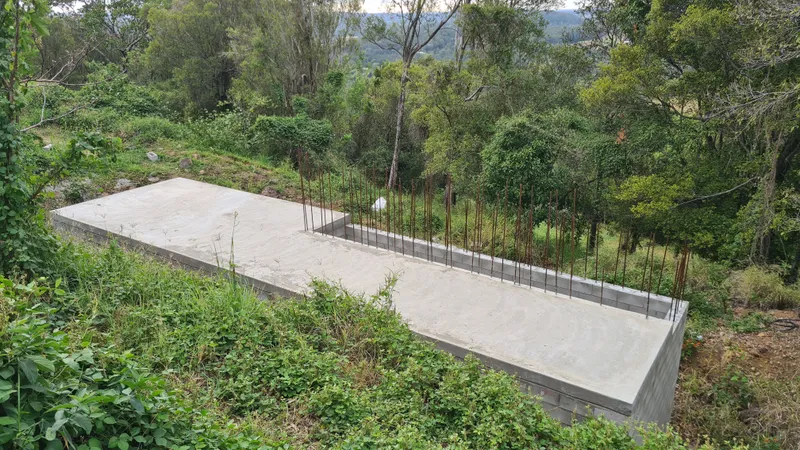
- E5 Waterproofing
- E5 Internal Cure + E5 Liquid Fly Ash
- Replaced crystalline admixtures
Exposed Roof Slab
— Maleny, QLD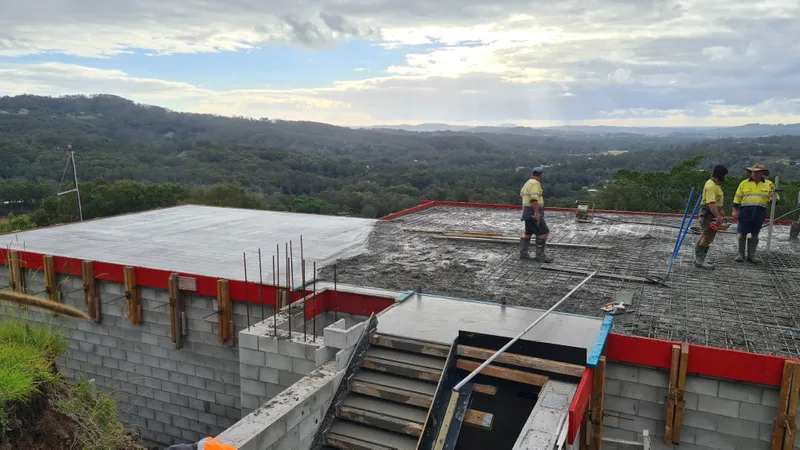

- E5 Waterproofing
- E5 Internal Cure + E5 Liquid Fly Ash
- Replace membrane
Watertank Waterproofing
— Glenwood, QLD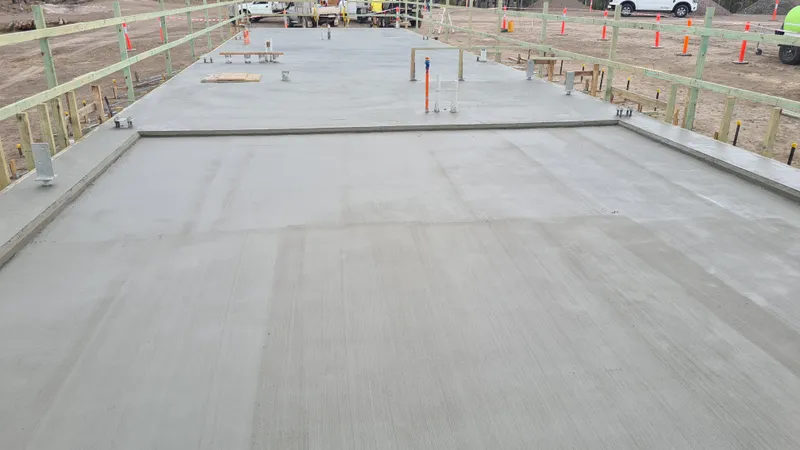
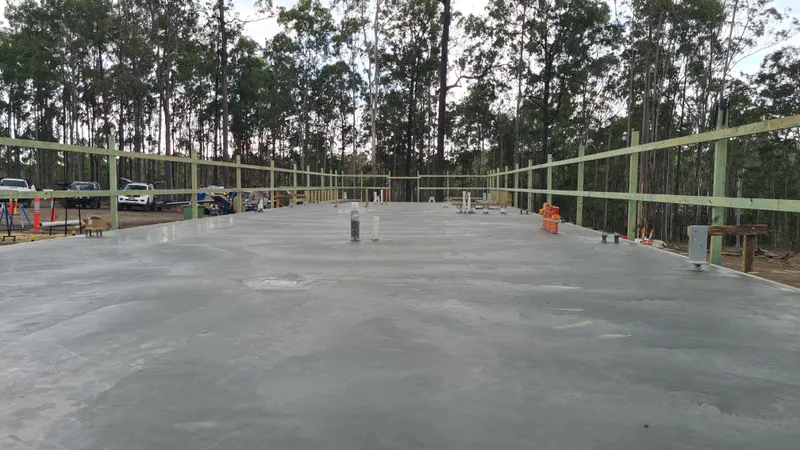
- Base slab, Walls & Lid
- E5 Waterproofing
- E5 Internal Cure + E5 Liquid Fly Ash
Queen St — Roof Waterproofing
— Brisbane CBD, QLD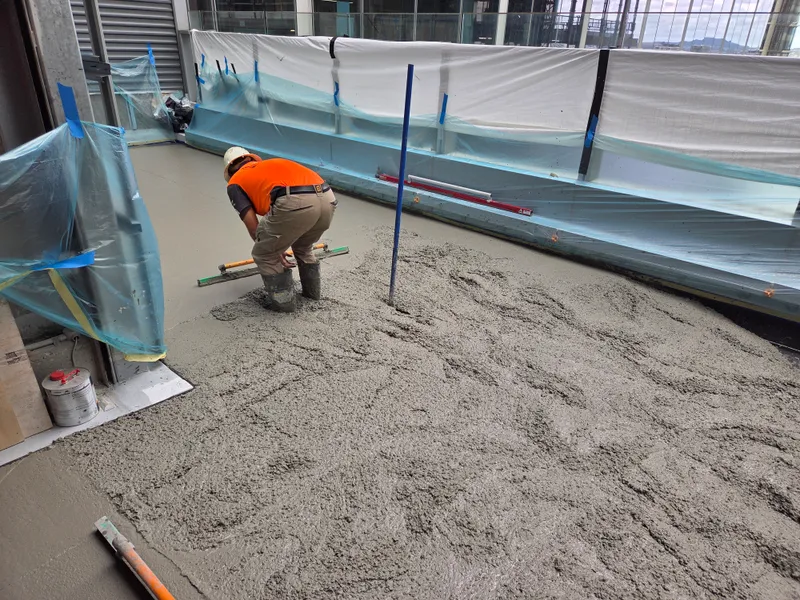
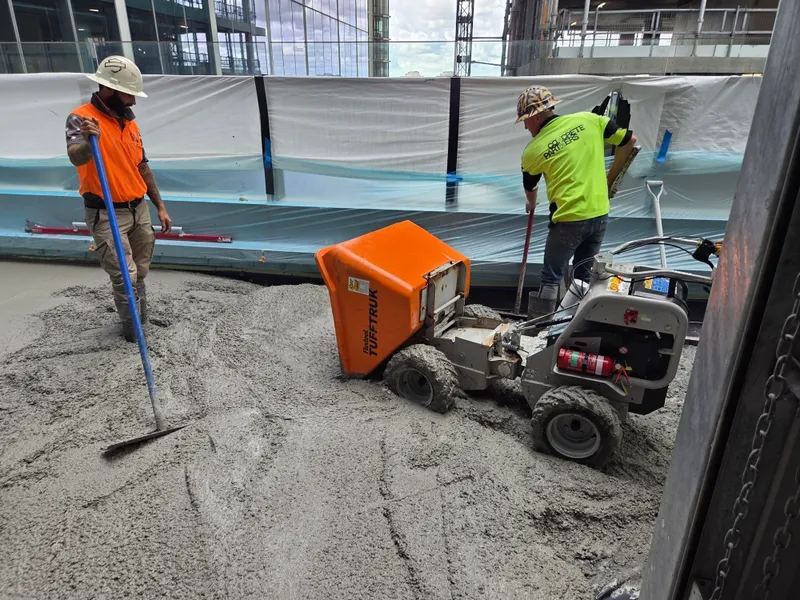
- 14th Story Roof Slab
- BHP Building
- E5 Waterproofing
- E5 Internal Cure + E5 Liquid Fly Ash
Ideal For
- Basement walls, podium slabs, and below-ground car parks
- Water storage tanks, reservoirs, and aquatic centres
- Spillways, dams, and hydraulic structures
- Mixed-use parking structures and commercial buildings
- Lift pits, service trenches, and buried infrastructure
Services We Provide
- Waterproofing specification and mix design
- Hydrostatic pressure assessment
- Compliance testing and verification
- Long-term monitoring and performance guarantees
Products for This Solution
E5 Internal Cure
Proprietary nano-silica admixture (AS 1478.1 Type SN) that ensures complete hydration, self-curing, and densified concrete matrix
View ProductE5 Liquid Fly Ash
Liquid SCM with wider particle band for molecular packing, consuming calcium hydroxide and replacing up to 10% cement
View Product